A missing tooth is easy to ignore at first. The gap is small. It’s in the back. Nobody notices. But your jaw doesn’t ignore it, and neither do the teeth on either side. They start to drift toward the empty space. The bone underneath begins to shrink from lack of use. And once that process gets going, fixing it later costs more than fixing it now.
A dental implant is the most direct way to stop all of that. It replaces the tooth from the root up, so the tooth you see is only half the story. The other half is doing the quiet work of holding your jaw and bite in place. Great Basin Dental places single dental implants in their Reno, NV dentist office.
What Happens When You Don’t Replace a Missing Tooth
Your teeth are held in position by the teeth around them. Remove one and the whole system adjusts, usually in ways you don’t want.
Your teeth shift. The neighbors tilt into the gap. The tooth above or below it starts to over-erupt because there’s nothing left to bite against. Over a few years, a single missing tooth can turn a healthy bite into a crowded one that’s harder to keep clean.
Bone shrinks. Bone stays dense when it’s being used. A natural tooth root delivers that stimulation every time you chew. Take the root away, and the jawbone in that spot starts to resorb. Lose enough bone, and you may no longer be a candidate for an implant without a graft first.
The gap collects bacteria. Food and plaque settle into a space that’s awkward to brush and floss. That raises your risk of decay on the neighboring teeth and gum disease around them. It’s common for a neglected gap to lead to a second missing tooth.
Your bite changes. Your remaining teeth take on more load. Some patients notice it as jaw soreness or uneven wear. Others don’t notice until a tooth cracks.
None of this happens overnight. But it does happen, and it’s easier to prevent than to undo.
Your Two Options for a Single Missing Tooth
There are two standard ways to replace one tooth. They’re not equally conservative, and it’s worth understanding why.
A Dental Bridge
A dental bridge replaces the missing tooth by anchoring a false tooth to the two teeth on either side. To make that work, we have to shave down those two healthy teeth so crowns can fit over them. The bridge is then cemented in place as one piece.
Bridges work, and they’ve been used for decades. The tradeoff is that you’re permanently altering two teeth that didn’t have a problem. Those teeth now carry the load of three, and if one of the anchors fails down the road, the whole bridge usually has to be redone.
A Single Tooth Implant
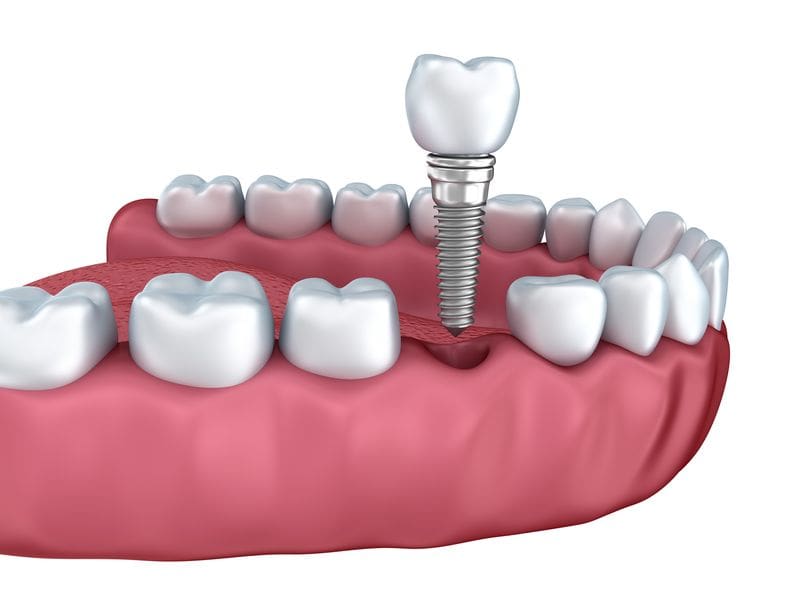
An implant replaces the root itself. A small titanium post goes into the jaw where the root used to be, and over a few months it fuses with the bone in a process called osseointegration. Once that’s solid, we attach a custom dental crown to the top of it. The result looks and functions like the tooth you lost, and the teeth around it stay untouched.
The implant does the job the root used to do. That’s the core difference from a bridge, and it’s why the bone around an implant tends to stay stable instead of shrinking.
What the Process Looks Like at Great Basin Dental
Every case is planned around your imaging and your health history, but the general sequence runs like this.
Consultation and imaging. We look at the gap, the bone under it, and the teeth on either side. You’ll leave knowing whether you’re a candidate, what it will cost, and how long it will take.
Implant placement. The post goes in under local anesthesia. Most patients tell us the appointment itself is easier than they expected.
Healing. This is the slow part, usually a few months. The implant is quietly bonding to bone, and there’s nothing you need to do except keep the area clean and come in for check-ins.
Crown placement. Once the implant is stable, we take an impression and have your crown made to match the shape and shade of your other teeth. It gets attached to the implant, and you’re done.
Because we handle the planning, placement, and restoration under one roof, you’re not bouncing between offices or waiting on a referral to get the next step scheduled.
Who’s a Good Candidate
Most healthy adults with a missing tooth and enough bone to support an implant are candidates. That includes people who’ve been missing the tooth for years, though the longer it’s been, the more likely you’ll need some bone grafting first. We can usually tell from imaging.
A few things make implants harder to recommend, at least without some preparation. Heavy smoking slows healing and raises failure risk. Uncontrolled diabetes affects how well the implant integrates. Active gum disease needs to be treated before we place anything. None of these rules you out permanently, but they change the plan and the timeline, and we’ll be upfront with you about that.
Schedule an Appointment
If you’re missing a tooth, the most useful thing you can do is get it looked at before the gap causes changes that are harder to reverse. A consultation with Dr. Guillen, Dr. Sievert, or Dr. Defilippi will tell you whether a single tooth implant is right for your situation and what it would involve.
Schedule an appointment online or call our Reno office at 775-363-9644. We’re happy to answer questions before you commit to anything.