
If you’re missing one or more teeth, you may have heard that dental implants can provide a long-lasting replacement. But what does getting an implant actually involve? Understanding the dental implant process can make the decision feel much less overwhelming.
Dental implants replace a missing tooth from the root up. A small implant post is placed into the jawbone to act as an artificial tooth root. Once the area has healed, a custom restoration, such as a dental crown, is attached to complete your smile. Because the implant is anchored in the jaw, the finished restoration can look and function much like a natural tooth.
The process takes time, but each step serves an important purpose. Your Great Basin Dental dentist will create a treatment plan based on your oral health, the number of teeth you’re replacing, and the condition of your jawbone.
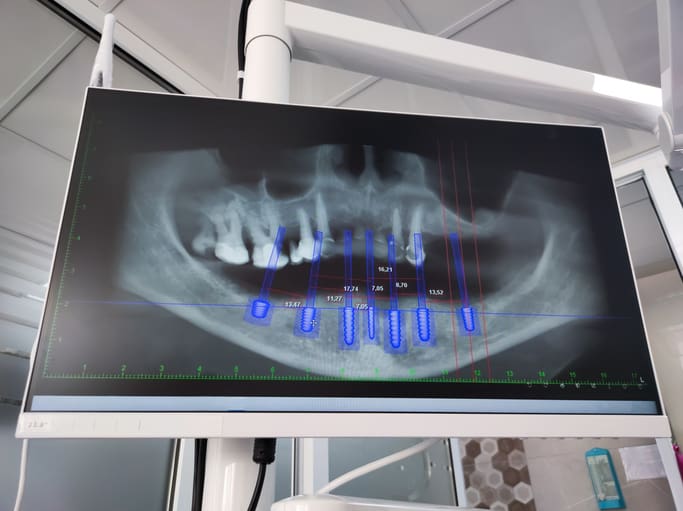
Step 1: Your Dental Implant Consultation
The first step is a comprehensive evaluation. Your dentist will examine your teeth, gums, and jaw and may use dental X-rays or other imaging to get a detailed view of the area where the implant will be placed.
This appointment is also your opportunity to talk about what you want to accomplish. If you’re replacing a single missing tooth, several teeth, or a full arch, your treatment plan may look different. Your dentist will also determine whether you have enough healthy bone to support an implant.
If you’ve experienced significant bone loss after losing a tooth, a bone graft may be recommended before implant placement. Treating existing gum disease or other oral health concerns may also be necessary before moving forward.
Step 2: Preparing the Implant Site
Not every patient needs additional preparation, but some do. If a tooth still needs to be removed, your dentist may recommend a tooth extraction before the implant can be placed. Depending on the condition of the tooth and surrounding bone, an implant may sometimes be placed immediately after extraction.
If you need a bone graft, the graft must have time to heal and integrate with your jawbone. This can add several months to the overall treatment timeline, but building a strong foundation can be important for long-term implant stability.
Your dentist will explain why any preparatory treatment is recommended and how it affects your individual timeline.
Step 3: Placing the Dental Implant
Once your mouth is ready, the implant post is placed into the jawbone. The implant acts as the root of your new tooth and provides the foundation for the final restoration.
After placement, your jawbone needs time to heal around the implant. This process, called osseointegration, allows the implant to become securely integrated with the surrounding bone.
Healing time varies from patient to patient. During this stage, following your dentist’s instructions is important for protecting the implant and supporting proper healing.
Step 4: Attaching the Abutment
Once the implant has successfully integrated with the jawbone, an abutment is connected to the implant. The abutment serves as the connector between the implant post and the visible replacement tooth.
In some cases, the abutment can be placed at the same time as the implant. In other situations, it may be placed during a later appointment. Your dentist will determine the best approach based on your treatment.
Step 5: Completing Your Smile With a Restoration
The final step is placing your replacement tooth. For a single missing tooth, this is often a custom dental crown. If you’re replacing multiple teeth, you may receive an implant-supported bridge or another type of restoration.
Your restoration will be designed to fit comfortably and blend with your surrounding teeth. Once everything is in place, your new tooth can help restore your ability to chew and speak while filling the gap in your smile.
How Long Does the Dental Implant Process Take?
There isn’t one timeline that applies to everyone. Some patients may be able to complete treatment in a few months, while others may need additional healing time because of bone grafting, extractions, or other procedures.
Although waiting for your mouth to heal can feel like a long process, rushing treatment isn’t worth compromising the stability of your implant. Your dentist will monitor your progress and let you know when each stage is ready.
Caring for Your Dental Implants
Once your dental implant treatment is complete, caring for your new tooth is much like caring for your natural teeth. Brush twice a day, clean between your teeth as recommended, and maintain regular dental visits.
Good oral hygiene is especially important because healthy gums and surrounding tissues help support your implant over time. Regular dental appointments also give your dentist an opportunity to monitor your implant and address potential concerns early.
Find Out If Dental Implants Are Right for You
Dental implants can be an excellent option for replacing missing teeth, but the right treatment depends on your individual needs. A consultation is the best way to find out whether you’re a good candidate and what your treatment timeline may look like.
At Great Basin Dental in Reno, NV, your dental team can evaluate your smile, discuss your goals, and help you understand your tooth replacement options. If you’re ready to move forward, your dentist can guide you through each stage of the dental implant process so you know what to expect along the way.
Replacing a missing tooth is a significant decision, but you don’t have to figure it out on your own. With a personalized treatment plan and proper care, dental implants can provide a stable, natural-looking solution designed to restore both the function and appearance of your smile. Schedule an appointment online or call our office today.