Losing one tooth is a problem. Losing several is a different problem, and it usually shows up in the way you eat before it shows up in the mirror. You start avoiding the left side. You cut food smaller. You skip the steak and order the soup. Those small adjustments add up, and they’re a sign that your bite is no longer working the way it should.
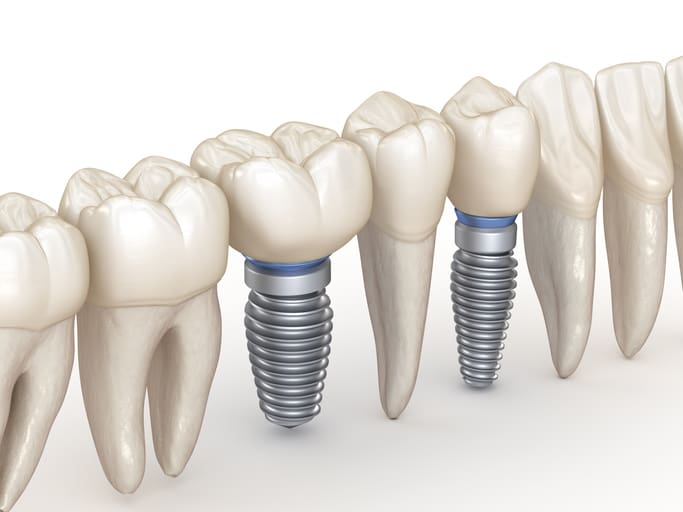
Multiple teeth implants are built around the pattern of what you’re missing. Two teeth in a row call for one kind of plan. Teeth scattered across your mouth call for another. A full arch missing is a third. The common thread is that implants replace roots, not just crowns, so the bone under your bite stays active and your remaining teeth keep their place. Great Basin Dental in Reno, NV recommends dental implants whenever possible for replacing missing teeth.
What Multiple Missing Teeth Do to Your Mouth
A single gap is a local problem. Several gaps change how your whole mouth functions.
Your bite redistributes. Every remaining tooth takes on more force than it was designed for. That shows up as wear, cracks, and jaw soreness over time. Patients often describe it as their bite feeling “off” without being able to point to why.
Your face changes shape. Bone loss after tooth loss isn’t just a dental issue. It’s a structural one. Multiple missing teeth, especially in the back, can lead to a sunken look around the mouth and a change in how your lips rest.
Your remaining teeth do more work. They tilt, drift, and over-erupt into the empty spaces. A mouth that was straight ten years ago can become crowded and hard to clean.
Your diet narrows. This one is easy to underestimate. People quietly give up foods they used to enjoy, and their nutrition follows. It’s one of the most common things patients mention after treatment: that they’d forgotten what it felt like to eat without thinking about it.
Three Approaches, Depending on Your Pattern
Most patients with multiple missing teeth fit into one of these. Which one applies to you depends on how many teeth are gone, where they were, and how much bone is available.
An Implant-Supported Bridge
A traditional dental bridge spans the gap by crowning the healthy teeth on either side, which means grinding down teeth that were fine to begin with. An implant-supported bridge skips that. Instead, implants go into the jaw to support the bridge, and the neighboring teeth are left alone.
The result is a fixed bridge that doesn’t come out, doesn’t rely on your other teeth, and keeps the bone under the gap stimulated. It’s often the most conservative option for a short span.
Individual Implants With Crowns
These are best for missing teeth that aren’t next to each other, with healthy teeth in between.
If you’re missing a molar on each side but the teeth between them are fine, you don’t need a bridge. You need two separate implants, each with its own crown. This keeps each replacement independent, so a problem with one doesn’t affect the other. It also means cleaning is the same as cleaning natural teeth, with no joined prosthetic to work floss around.
Implant-Supported Dentures or a Full Arch
A traditional denture rests on your gums and stays put with suction or adhesive. That’s why it slips when you laugh, clicks when you talk, and limits what you can chew. An implant-supported denture or full-arch restoration anchors to implants in the jaw instead. It’s fixed or removable depending on the design, but either way it doesn’t move around.
For patients facing the loss of most of an arch, this approach often preserves more bone and function than a conventional denture would, and it can sometimes be planned around fewer implants than replacing each tooth individually.
Planning Matters More Than People Expect
With one implant, there’s some room for adjustment. With several, the plan has to be right before anything goes in. The implants need to be positioned so the final teeth meet correctly when you bite, not just so they look right in a photo.
That’s why we start with imaging of your jaw and a conversation about what you actually want to be able to eat and do. From there, we map out how many implants you need, where they go, and what the sequence looks like. If you need bone grafting first, we’ll tell you up front rather than after you’ve committed.
Because we handle the planning, placement, and restoration in one office, the plan you agree to at the consultation is the plan that gets carried out. No handoffs, no waiting on a referral to schedule the next phase.
Who’s a Good Candidate
Most adults in good general health with adequate bone are candidates for multiple implants. The things that complicate it are familiar: heavy smoking, uncontrolled diabetes, active gum disease, and insufficient bone. None of these are permanent disqualifiers, but they change the plan, and sometimes the timeline.
We’ll be straightforward with you about what we see. If you’re not ready for implants today, we’ll tell you what would need to change first.
Schedule an Appointment
If you’re missing several teeth, the most useful thing you can do is get a clear picture of what’s possible in your case. A consultation with Dr. Guillen, Dr. Sievert, or Dr. Defilippi will cover your options, what each involves, and what it costs, so you can decide with real information instead of guesses.
Schedule an appointment online or call our Reno office. We’re glad to answer questions before you commit to anything.